



Best Schools in India : The Most Complete Parent’s Guide to Choosing the Right School
Choosing a school is one of the biggest decisions in a child’s life-and also one of the most confusing decisions for parents in India.
If you are a parent going through school admission stress right now, you probably already know how it feels:
- Too many schools
- Too many boards
- Too many opinions from relatives and friends
- And every school brochure saying “best education” and “world-class learning”
At some point, everything starts sounding the same.
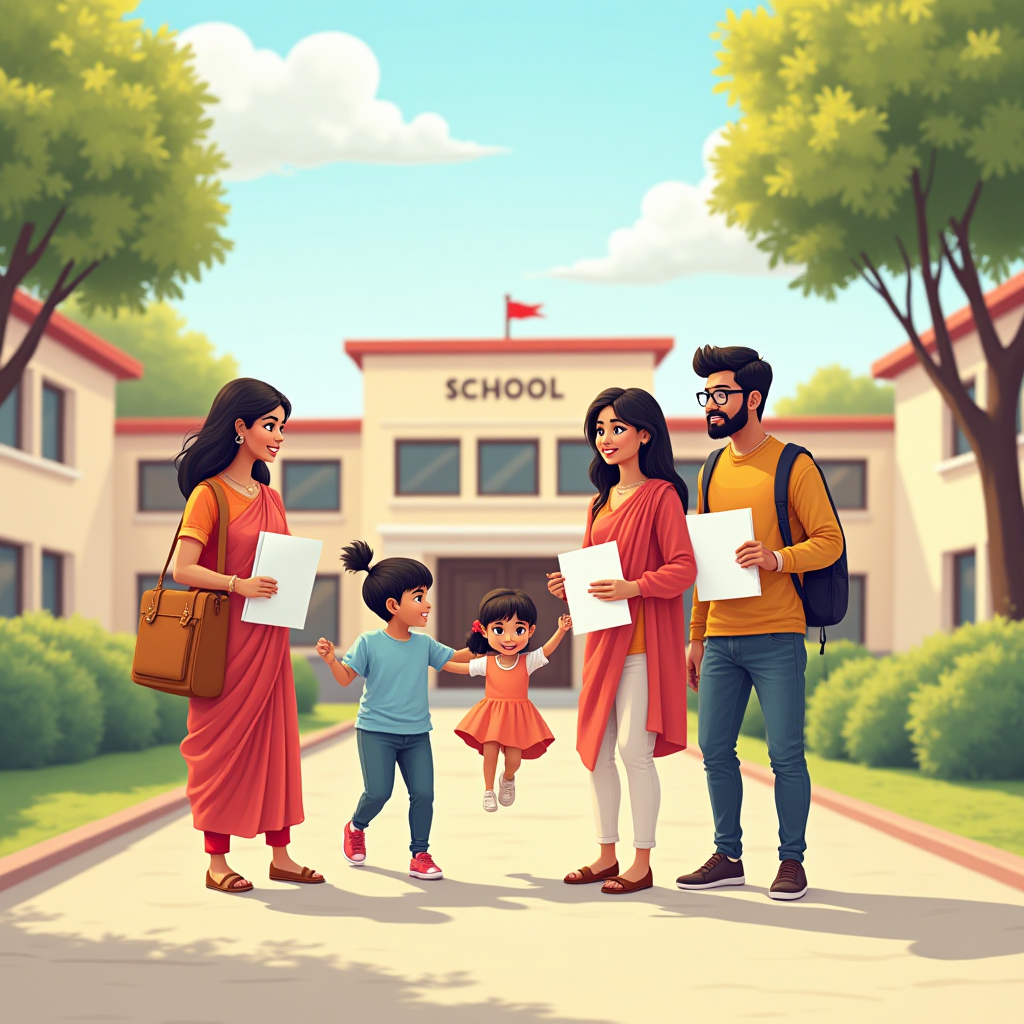
But here is the truth most parents realize only later:
– A school is not “best” in general
– A school is “best for a specific child”
This article is a complete guide to help you understand schools in India deeply, compare options properly, and make a decision with clarity-not confusion.
The Real Meaning of “Best School”
Before we talk about CBSE, ICSE, IB, or city-wise lists, let’s clear something important.
A “best school” is not defined by:
- Big buildings
- Expensive fees
- Famous name
- Social media reputation
- Admission difficulty
Instead, a good school is defined by:
- How your child feels there
- How your child learns
- How teachers interact with students
- Whether the environment builds confidence or pressure
- Whether learning becomes natural or stressful
Many parents realize this after admission-but by then, changing schools becomes difficult.
Understanding the Education System in India
India has a wide school ecosystem, and each system is designed differently.
1. CBSE Schools (Most Widely Chosen Board in India)
CBSE is the most commonly chosen board across India.
Why CBSE is popular:
- Standardized curriculum across India
- Strong focus on Science and Mathematics
- Direct alignment with competitive exams like JEE and NEET
- Easy transfer between cities
What parents often like:
- Structured syllabus
- Clear exam pattern
- Widely available schools
What parents sometimes worry about:
- Some schools focus heavily on marks
- Less emphasis on creativity in certain institutions
CBSE works well for families looking for structured academic progression.
How to Prepare Your Child for School Admission Interviews in India
2. ICSE Schools (Depth and Language Focus)
ICSE is known for detailed learning and strong English foundation.
Key features:
- Detailed syllabus
- Strong English language focus
- Balanced academics (science + arts)
- Encourages analytical thinking
What parents like:
- Strong communication skills development
- Concept clarity
Challenges:
- Heavier syllabus compared to CBSE
- Requires consistent study habits
ICSE is ideal for children who enjoy reading, writing, and detailed learning.
3. IB Schools (International Curriculum)
IB schools follow a global education model.
Features:
- Project-based learning
- Research-oriented studies
- Less memorization, more application
- Global recognition
What parents like:
- Strong focus on creativity
- International teaching methods
- Skill-based education
Challenges:
- Very high fees
- Limited availability in cities
- Requires active parental involvement
IB is suitable for globally mobile families or international career planning.
4. State Board Schools
Each Indian state has its own board system.
Features:
- Local language support
- Lower academic pressure in some cases
- Affordable education
What parents should understand:
- Quality varies significantly between schools
- Exposure may be limited compared to national boards
Suitable for families prioritizing affordability and regional education.
5. International Schools (Modern Hybrid Learning)
These schools often use IB, Cambridge, or mixed curriculums.
Features:
- Smart classrooms
- Digital learning tools
- Focus on communication and personality
- Strong extracurricular programs
Reality check:
- High fees
- Competitive admissions
- Not available in all areas
Suitable for families wanting modern global-style education.

School Selection Across Major Indian Cities (Real Parent Experience)
Delhi NCR (Delhi, Noida, Gurgaon)
Delhi NCR is one of the most competitive education regions in India.
Reality for parents:
- Admissions fill very quickly
- Many schools conduct entrance or interaction tests
- Popular schools have long waiting lists
- Distance plays a huge role due to traffic
What parents usually look for:
- CBSE schools with strong academics
- Schools near residential areas
- Reputation + accessibility balance
Mumbai
Mumbai has space limitations and high demand.
Reality:
- Limited school seats
- High fees in private institutions
- Strong competition for admissions
- Travel time is a major concern
Common preference:
- ICSE and CBSE schools with strong English focus
Bangalore
Bangalore is known as India’s international school hub.
Reality:
- High number of IB and international schools
- Modern teaching methods are common
- Fees vary widely
- Tech-oriented learning environment
Parent focus:
- Balanced academics + creativity
- Future-ready skills
Hyderabad
Hyderabad offers a balanced education ecosystem.
Reality:
- Growing number of quality schools
- More affordable compared to metro cities
- Strong CBSE presence
- Increasing international schools
Parent preference:
- Value-for-money schools
- Good infrastructure at moderate cost
Chennai
Chennai has a strong academic culture.
Reality:
- Discipline-focused schooling
- Strong ICSE and CBSE presence
- Traditional learning still valued in many schools
Parent focus:
- Academic consistency
- Strong fundamentals
Pune
Pune is growing rapidly as an education hub.
Reality:
- Mix of affordable and premium schools
- IT population drives demand
- Balanced curriculum options
Kolkata
Kolkata has legacy education institutions.
Reality:
- Many older reputed schools
- Strong ICSE preference
- Emphasis on language and academics
Ahmedabad
Ahmedabad is growing steadily in education infrastructure.
Reality:
- More affordable school options
- CBSE widely preferred
- Increasing modern schools
Step-by-Step Method to Choose the Right School
Step 1: Understand your child’s learning style
Ask:
- Does my child learn by reading, doing, or observing?
- Does my child enjoy structured learning or creative activities?
- Does my child get stressed easily under pressure?
Step 2: Distance matters more than parents think
A school 45–60 minutes away may seem fine initially, but over years it affects:
- Sleep cycle
- Energy levels
- Study time
- Mood
- Daily routine consistency
Step 3: Teaching style is more important than brand name
Look for:
- Activity-based learning
- Encouragement for questions
- Balanced academic pressure
- Attention to weak students
Step 4: Fees are not just tuition
Always check:
- Admission fees
- Transport charges
- Books and uniforms
- Activity fees
- Annual charges
Step 5: School environment matters deeply
A good school environment should feel:
- Safe
- Encouraging
- Balanced
- Respectful
- Emotionally supportive
Common Mistakes Parents Make
- Choosing school based only on popularity
- Following “top 10 rankings” blindly
- Ignoring child personality
- Overlooking travel time
- Assuming expensive means better quality
- Changing schools too frequently due to pressure
Admission Process in India (General Pattern)
- Application submission
- Interaction / entrance test
- Document verification
- Admission confirmation
- Fee payment
Documents Required (Common List)
- Birth certificate
- Address proof
- Passport-size photos
- Previous school records (if applicable)
- Transfer certificate (for higher classes)
What Parents Realize After Admission (Reality Insight)
Many parents share similar experiences after choosing a school:
- A “famous” school may not suit every child
- Smaller schools sometimes give more attention
- Children perform better when they feel comfortable
- Pressure-based learning reduces interest over time
- A happy child learns faster than a pressured child
Final Thoughts
Choosing a school is not about finding perfection.
It is about finding balance.
A good school should help your child:
- Feel confident
- Learn naturally
- Build curiosity
- Develop discipline without fear
- Grow emotionally and academically
Every child is unique. Every school is unique. And the right match depends on understanding both.
If you are a parent right now confused about admissions, remember this:
– The best school is not the most famous one.
-The best school is the one where your child feels they belong.
Disclaimer
This article is for general informational purposes only. School structures, admission policies, and facilities may vary and change over time. Parents are strongly advised to verify all details directly with schools before making admission decisions.